La Llorona The Weeping Woman
“Some legends begin with a body. This one begins with a sound.”
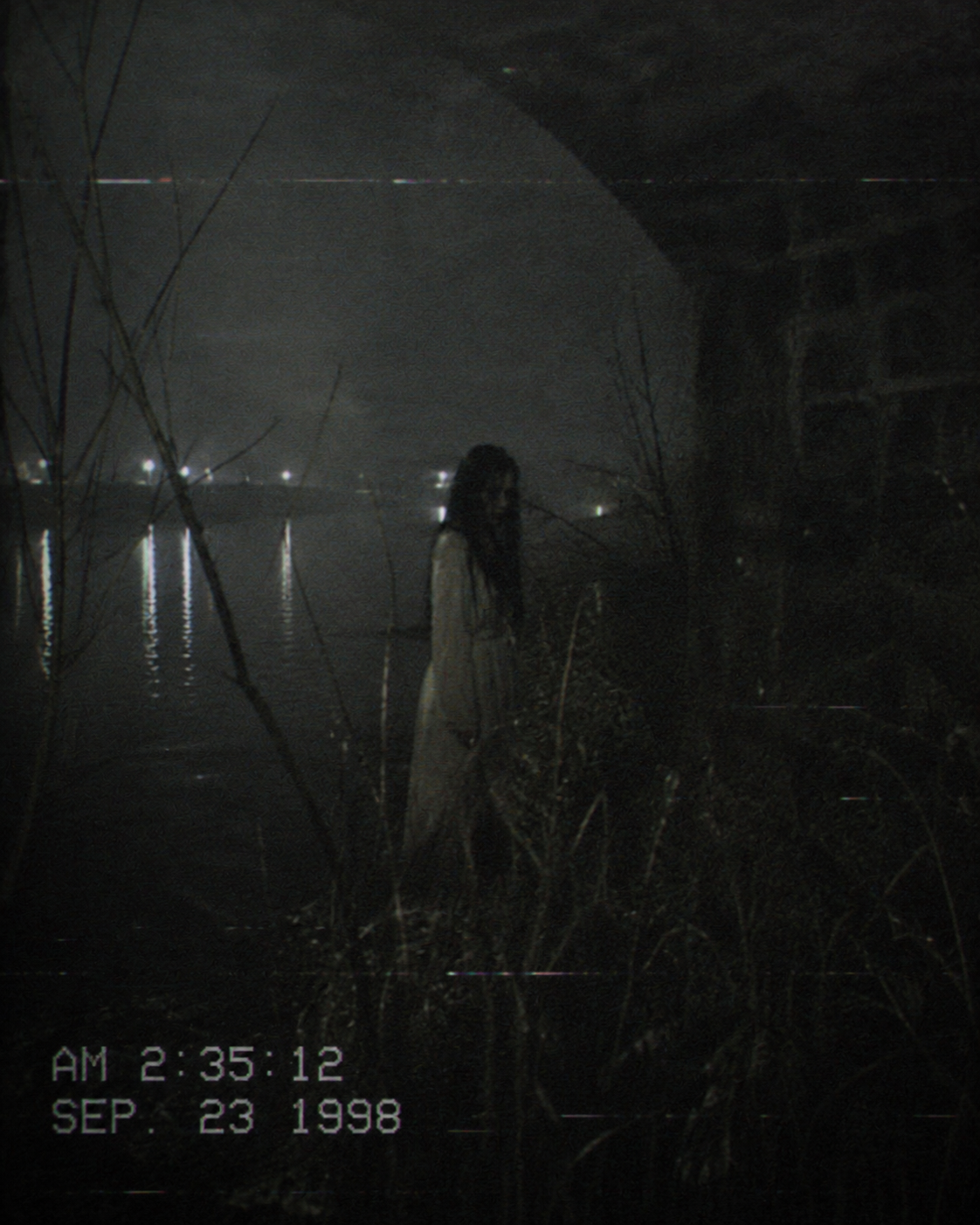
La Llorona Archive File Summary
Sophie’s Opening Note
I stumbled across the earliest trace of La Llorona while researching the omens said to have appeared before the fall of Tenochtitlan in the Florentine Codex. At first, I couldn’t believe it. Then I couldn’t get it out of my head.
I began dreaming about a woman in white. She would visit me near water. I’d wake with the same cry in my ears:
When I looked it up, I learned it means, “Oh, my children.”
Following that lead took me through a 1910 collection of Mexico City legends, into folklore archives in Arizona and California, and eventually to a juvenile detention facility in Los Angeles where girls were still telling stories about her in the 1960s.
The trail kept changing. The woman didn’t. She was still crying. Still searching. Still turning up wherever people had given a name to grief they couldn’t settle.
La Llorona: The Short Version
La Llorona means “the Weeping Woman.” She is a female ghost from Mexican and borderland folklore whose crying is heard at night, often near water.
In the version most people know, a woman kills or loses her children and spends eternity searching for them. Some tellings place her beside a river. Others move her to canals, arroyos, lakes, drainage ditches, streets, parks, missions, or places where it has recently rained.
Her name may be María, Luisa, or nothing at all. She may be abandoned, betrayed, widowed, abused, punished, mentally unwell, or grieving a child who died through no fault of her own.
The details that survive most often are the woman, the crying, the children, the night, and the search.
The Common Version of the La Llorona Legend
The familiar story gives the woman a name, usually María, and places her in love with a wealthy man. They have children together. He leaves, marries someone else, or chooses a woman his family considers more suitable.
María takes the children to the water and drowns them. The rage passes almost as soon as the current closes over them. She understands what she’s done, searches for their bodies, and dies soon afterward. Some storytellers say she drowns herself. Others say she’s turned away from heaven and told she cannot enter until she finds the children she killed.
So she returns to the water and calls for them.
Is La Llorona Real?
There is no verified historical record of one woman whose life matches every part of the modern legend. There are old texts, local encounter stories, named places, family warnings, and generations of people who insist the crying woman is real.
The Florentine Codex preserves an omen involving a woman crying for her children before the Spanish conquest. Later Mexico City traditions describe a white-clad woman walking at night and disappearing near water. Twentieth-century collectors recorded people who said they had seen her, knew someone who had, or had been warned what would happen if they answered her call.
Hawes found something important in the stories told at Las Palmas School: none of the girls’ accounts qualified as firsthand personal-experience narratives, although phrases such as “I saw her once” sometimes appeared as validation. A story can be sincerely believed without functioning like a police report.
Historical Roots of La Llorona
The scholars in this file do not agree on one origin.
Thomas A. Janvier and later writers treated La Llorona as an old Mexico City legend with roots in Indigenous beliefs. Betty Leddy saw an early body of traditions about female spirits that may have helped the legend grow. Bacil Kirtley argued that Mexican fragments may have merged with European tales. Robert Barakat compared La Llorona with sirens and water women from several cultures.
I’m persuaded by a layered explanation. Several streams appear to meet in the archive:
- Nahua omen traditions involving women who cry or wander at night
- Indigenous female deities and spirits associated with water, childbirth, death, and danger
- European stories about white women, child-killing ghosts, and dangerous female apparitions
- Colonial religious ideas about guilt, punishment, repentance, and unrest after death
- Mexican family warnings shaped around water, children, night travel, sexuality, and social expectations
Earliest Known References and Historic Parallels
The Florentine Codex
Book 12 of the Florentine Codex describes a woman heard crying at night for her children before the conquest. The passage predates the developed story most people now call La Llorona. It preserves the sound that later becomes central: a woman’s voice in the darkness, children, fear, and departure.
Cihuacóatl and the Cihuapipiltin
Several writers connect La Llorona with Cihuacóatl, a Nahua figure associated with motherhood, war, omens, and night wandering. Frances Toor also discussed the Cihuapipiltin, spirits of women who died in childbirth and were feared at crossroads.
The resemblance deserves attention, although resemblance is not identity. I wouldn’t collapse these figures into one. I would keep the folders beside each other.
Chalchiuhtlicue and the Water-Woman Parallel
Robert Barakat followed another route through the Florentine Codex. He highlighted Chalchiuhtlicue, the “Jade-skirted” goddess of water, whose power included carrying people into dangerous currents and whirlpools.
Mexico City Traditions
Betty Leddy cited Luis González Obregón for a tradition that placed a weeping woman in Mexico City around 1550. She walked on moonlit nights, dressed in white, wailed through the streets, and disappeared into a lake.
By the time Janvier published Legends of the City of Mexico in 1910, the white-clad night wanderer had become recognizable as La Llorona in English-language print.
La Llorona Archive Excerpts
I’ve kept these excerpts short. The purpose is to show the trail, then send readers back to the source.
Florentine Codex, Book 12
“Oh my children, where am I to take you?”
The wording varies by translation. What matters is the combination of a woman’s nighttime cry, children, and approaching catastrophe.
Thomas A. Janvier, Legends of the City of Mexico (1910)
Janvier’s La Llorona moves through Mexico City at night, concealed in white, crying for her children. Encountering her can bring madness, collapse, or death.
Betty Leddy, “La Llorona in Southern Arizona” (1948)
“There is considerable variety among the accounts of La Llorona in Arizona.”
Leddy based her paper on forty-two collected items. Her archive contains women in white, grieving mothers, child-takers, figures near water, and stories traveling between Mexico, Arizona, and California.
Bess Lomax Hawes, “La Llorona in Juvenile Hall” (1968)
“I’m scared of something I don’t know.”
That line came from a fifteen-year-old girl whose account placed La Llorona along riverbanks in the rain.
Robert A. Barakat, “Wailing Women of Folklore”
Barakat compared a northern Mexican lake variant with Greek Sirens and a Brazilian weeping woman who leads men into the jungle. He focused on the voice as lure.
“The great diversity of the legend” makes a single type difficult to define.
Modern Chicana Literary Scholarship
“It is in fact misleading to refer to ‘the Llorona legend.’”
The author quotes Shirley Arora’s description of a complex of legends connected by a female phantom who usually, though not always, weeps.
Regional Variations of La Llorona
Legends localize themselves. Place names change. A river becomes an arroyo. A lake becomes a storm drain. A path becomes a freeway wash.
| Region or Setting | Recorded Variations |
|---|---|
| Mexico City | A white-clad woman cries through the streets at night, disappears near water, and may terrify or kill those who approach. |
| Southern Arizona | Mourners, child-takers, women in white, figures near arroyos, and warnings carried across the border through families and media. |
| New Mexico and Texas | The legend attaches to the Rio Grande, local rivers, family warnings, death omens, and Spanish-speaking communities. |
| Los Angeles | Stories tied to the L.A. River, juvenile facilities, missions, parks, drainage ditches, rain, hospitals, and foster homes. |
| Northern Mexico | A lake siren appears to need rescue, draws a man into deep water, then pulls him under. |
| Family Oral Tradition | Stay away from water, come home before dark, listen to your elders, and do not answer a strange voice. |
Three Recurring Faces
| Form | How She Appears |
|---|---|
| The Grieving Woman | She cries, searches, wanders, and mourns children who are missing or dead. |
| The Woman Dangerous to Children | She steals, attacks, replaces, or mistakes living children for her own. |
| The Siren | She uses crying, beauty, helplessness, or her voice to draw men toward water, death, or disappearance. |
Common Motifs in the La Llorona Legend
| Motif | How It Functions |
|---|---|
| The Cry | It warns, lures, announces grief, and often reaches the witness before the apparition does. |
| Water | The place of death, disappearance, danger, birth imagery, cleansing, and return. |
| Lost Children | They may be murdered, drowned accidentally, taken away, abandoned, or forever beyond recovery. |
| White or Black Clothing | White dominates many versions, although black capes, veils, and hoods also appear. |
| Rain | Several Los Angeles accounts place her during rain or a set number of days afterward. |
| Searching | Her punishment has no completion. She looks for children, replacements, fathers, or a way to rest. |
| Localization | The teller anchors the story to a known river, park, road, mission, institution, or neighborhood. |
Repeated Details in Collected Accounts
- Long hair, a veil, rebozo, cape, or hood
- A pale, hidden, skeletal, animal, or missing face
- Children’s bones carried in or along her back
- Appearances near rivers, canals, lakes, streets, parks, missions, and institutions
- Vanishing, entering vehicles, appearing in mirrors, or watching through windows
- Warnings linked to dogs howling, approaching death, rain, dusk, and nighttime wandering
- Protective practices involving crosses, sage, eucalyptus, prayer, or religious symbols
La Llorona Witness and Encounter Patterns
Modern witnesses often report the sound first: crying from a canal, a river, a dark field, a wash, or a road where no one can be found.
- A figure dressed in white or black near water
- A crying woman who disappears when approached
- A woman who enters a car or is suddenly seen inside it
- A ghost who appears after rain
- A woman who mistakes living children for her own
- A voice that draws a person away from safety
- A sighting interpreted as a death omen
- A story validated through a friend, uncle, counselor, priest, social worker, or older relative
Possible Explanations for the La Llorona Legend
| Explanation | What It Helps Explain |
|---|---|
| Water-safety warning | Why the story is told to children and attaches itself to rivers, canals, arroyos, lakes, and drainage systems. |
| Family or neighborhood tradition | Why short descriptions circulate without a complete plot while still being believed. |
| Grief narrative | Why mourning, loss, searching, and the impossibility of recovery remain emotionally stable. |
| Religious morality tale | Why sex, motherhood, betrayal, guilt, punishment, repentance, and denied rest shape many biographies. |
| Colonial and cultural memory | Why later interpreters connect the legend to conquest, displacement, identity loss, and community violence. |
| Social symbol | Why a community may reshape the ghost around fears concerning mothers, children, abandonment, and confinement. |
| Natural sounds | Why wind, animals, moving water, distant human cries, and poor visibility may generate encounters. |
| Legend performance | Why the story changes with the teller, audience, location, and purpose. |
Cultural Meaning and Modern Interpretation
Hawes found La Llorona inside a juvenile facility where girls were living with indefinite sentences, family disruption, fear, and no simple answer to what they had to do to leave. In her reading, the ghost’s endless search mirrored the girls’ own unresolved lack.
The question stops being only, “Who was La Llorona?” It becomes, “Why did this community keep choosing her?”
La Llorona, La Malinche, and the Virgen de Guadalupe
Late twentieth-century Chicana writers and scholars frequently placed La Llorona beside La Malinche and the Virgen de Guadalupe. The three figures were read as cultural models used to define acceptable and unacceptable womanhood: the sacred mother, the accused traitor, and the punished or failed mother.
Modern writers reworked those roles. La Llorona could become a voice of rage, grief, survival, historical memory, or supernatural justice.
The Part That Never Resolves
Hawes identified a recurring sequence: a taboo is violated, the children are lost, and La Llorona attempts to escape the consequence through death, return, searching, grief, revenge, kidnapping, or substitution.
The attempt fails. She never finds the children. The loss is never corrected.
La Llorona in Film, Literature, Music, and Popular Culture
La Llorona moved into print long before modern horror cinema. She appears in nineteenth-century fiction, Mexico City legend collections, folklore journals, theater, songs, novels, schoolyard stories, oral-history projects, podcasts, and online paranormal accounts.
Film
Mexican cinema adapted La Llorona by the early sound era. Later films drew from different branches: the ghost mother, the curse, the woman in white, colonial memory, and political mourning.
The 2019 Guatemalan film La Llorona uses the legend to engage with genocide and historical accountability, while The Curse of La Llorona presents a supernatural antagonist within a franchise structure.
Music
“La Llorona” is also the title of a Mexican song tradition. Frances Toor included the song in A Treasury of Mexican Folkways. The song and ghost legend overlap through sorrow, death, longing, and the image of the weeping woman, although they should not be treated as one fixed work.
Literature
Chicana and Latina writers have repeatedly reclaimed La Llorona from the narrow role of punished mother. In their work she may carry colonial grief, maternal rage, social criticism, queer identity, cultural memory, or resistance.
Sophie’s Closing Note
When I opened this file, I expected to find the oldest version of the story.
I found women in white walking through Mexico City. I found a goddess of water pulling men beneath the surface. I found a grieving mother, a dangerous siren, a child-taker, a death omen, and a ghost who appeared three days after rain.
Then I found her inside Juvenile Hall.
The girls at Las Palmas gave her the L.A. River, hospital corridors, foster homes, mirrors, parks, and windows. They gave her their fears and their questions. She kept searching because they understood what it meant to be missing something and have no clear way to get it back.
Shirley Arora was right to call this a complex of legends. There may never have been one La Llorona story to recover.
There is a woman who weeps. There are people who hear her. There is a loss the story never repairs.
That is where I’m leaving the file tonight.
Status: Open.
— Sophie Vale
La Llorona Sources and Further Reading
This file separates early texts, folklore collections, comparative studies, and modern interpretations. A source may be important without proving a single origin.
Early and Historic Texts
- Bernardino de Sahagún and collaborators, Florentine Codex, Book 12, Chapter 1. Getty Digital Florentine Codex.
- Thomas A. Janvier, Legends of the City of Mexico (1910), “Legend of La Llorona” and notes.
- Luis González Obregón, Las calles de México.
- Diego Durán, colonial-era writings on Nahua history, omens, religion, and conquest traditions.
Folklore Collections and Studies
- Betty Leddy, “La Llorona in Southern Arizona,” Western Folklore 7, no. 3 (1948): 272–277.
- Betty Leddy, “La Llorona Again,” Western Folklore 9 (1950): 363–365.
- Bacil F. Kirtley, “La Llorona and Related Themes,” Western Folklore 19 (1960): 155–168.
- Bess Lomax Hawes, “La Llorona in Juvenile Hall,” Western Folklore 27, no. 3 (1968): 153–170.
- Robert A. Barakat, “Wailing Women of Folklore,” Western Folklore.
- Frances Toor, A Treasury of Mexican Folkways (1947).
- Fernando Horcasitas Pimentel, “Textos modernos de ‘La Llorona.’”
- Soledad Pérez, “Mexican Folklore from Austin, Texas,” in The Healer of Los Olmos and Other Mexican Lore (1951).
Modern Interpretation
- Shirley L. Arora, scholarship describing La Llorona as a complex of related legends rather than one canonical story.
- “La Malinche, La Virgen de Guadalupe, and La Llorona: The Recuperation of Divine Supernatural Powers in Late 20th-Century Chicana Literature.”
- Domino Renée Pérez, There Was a Woman: La Llorona from Folklore to Popular Culture.
- Michael Kearney, “La Llorona as a Social Symbol,” Western Folklore 28, no. 3 (1969): 199–206.
Context Sources
- Catherine J. Hinckle, “The Devil in New Mexican Spanish Folklore,” Western Folklore 8, no. 2 (1949): 123–125. DOI: 10.2307/1497583.
- Library of Congress, Folklife Today essays on La Llorona’s roots, branches, and Spanish parallels.