Archive Personnel File 001 · Access Granted
Sophie Vale
Archivist. Reluctant skeptic. Collector of stories that refuse to remain buried.
Active Investigation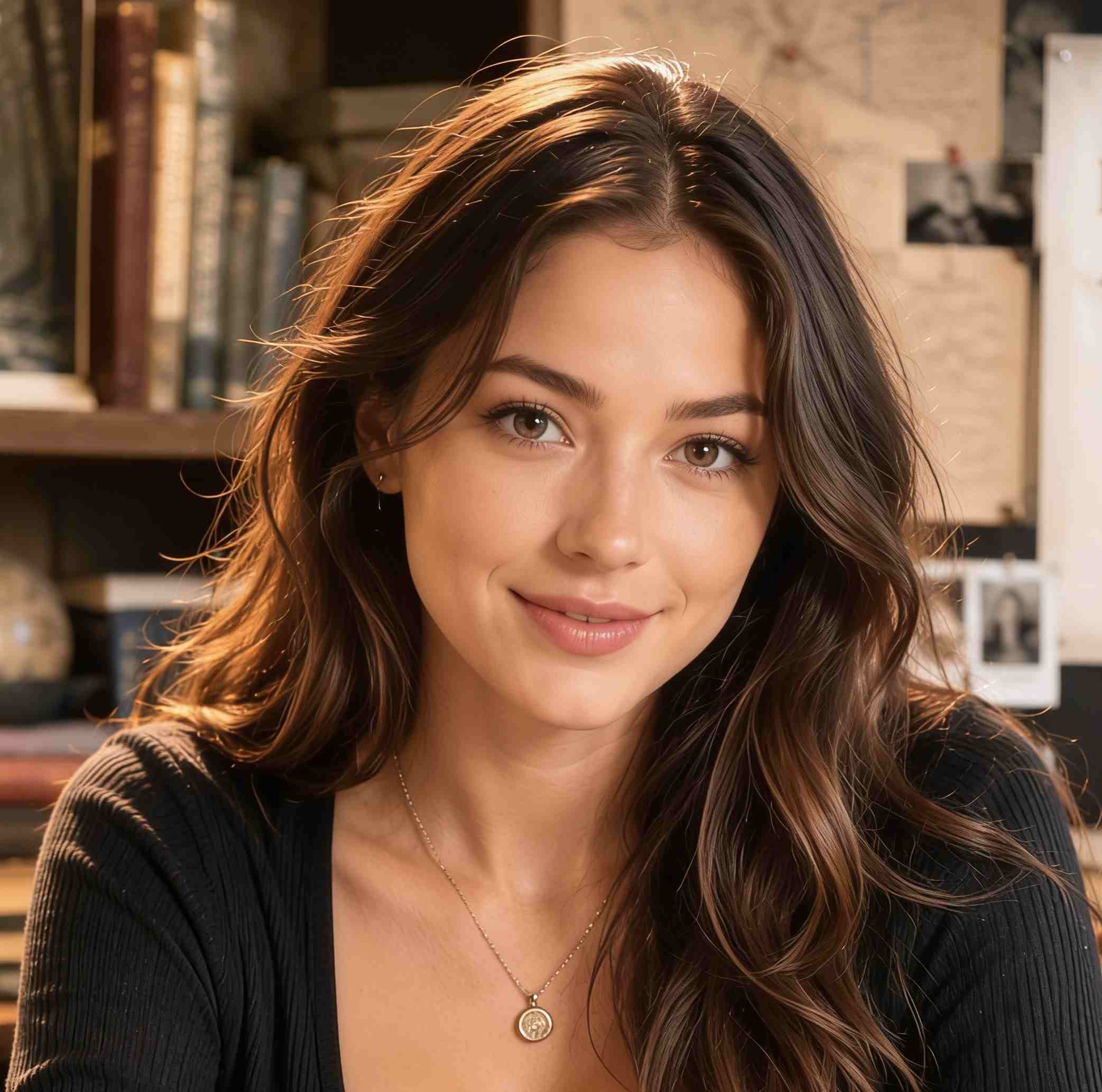
Evidence image 001-A · Archive office · Photograph retained in file
Archive Status
Still Following
- Occupation
- Archivist and investigator
- Specialty
- Stories with unreliable paperwork
- Known Location
- Usually somewhere between the record and the rumor
- Disposition
- Curious, cautious, difficult to frighten
- Current Assignment
- Urban Legends Archive
- File Classification
- Archivist, folklorist, mythologist
A note from the wrong side of midnight
I did not mean to become an archivist of impossible things.
I meant to find the beginning of one story. Instead, I found six beginnings, three missing newspapers, two witnesses who remembered the same night differently, and a warning that had crossed an ocean without anyone noticing.
That was the problem. Once you see the thread, it becomes very difficult not to pull it.
So this is where I keep what turns up: the old accounts, the changing details, the reasonable explanations, and the pieces that refuse to behave reasonably at all.
— Sophie
01
Identity Report
Who Is Sophie Vale?
Sophie Vale is the archivist, investigator, and narrative voice of the Urban Legends Archive. She guides readers through urban legends, folklore, mythology, fairy tales, legendary creatures, and the people who preserved those traditions.
She approaches every file with curiosity rather than certainty. A witness statement is not automatically proof. A skeptical explanation is not automatically the end of the story. An old book may preserve a valuable trace—or simply repeat an even older mistake.
Sophie’s work is to keep those distinctions visible while making the investigation worth following.
The short answer: Sophie is a folklorist and archivist. The historical sources, texts, newspaper accounts, scholarly research, and documented evidence examined in her case files are real. She gives the archive a consistent voice through which to explore them.
“Every legend leaves a trace. Every trace tells a story.”
02
Origin of Assignment
Why She Opened the Archive
Sophie once thought legends were stories people either believed or dismissed. Then she began following their sources.
One version led to another. A ghost moved from a river to a highway. A monster crossed from an ancient travel account into a medieval manuscript. A family warning became a schoolyard dare, then a chain email, then a video watched millions of times. The facts shifted, but certain details survived.
The archive began as an attempt to answer a straightforward question: Where did this story come from?
It quickly became an investigation into harder ones. Why did people need the story? What did it warn them about? Who changed it? What survived the change? And why, long after its supposed explanation was found, did the story continue?
03
Research Procedure
How Sophie Investigates a Story
The goal is not to prove every legend true or false. It is to determine what the surviving record can support, what people reported, how the story changed, and what remains uncertain.
01 · Find the Earliest Trail
Search old books, folklore collections, newspapers, oral histories, maps, broadcasts, and archival fragments for the oldest identifiable forms.
02 · Compare the Versions
Track changes in place, time, teller, motive, appearance, warning, and outcome. The differences often reveal as much as the similarities.
03 · Separate the Evidence
Keep documented history, witness testimony, folklore, interpretation, popular retelling, and speculation in their proper folders.
04 · Leave the Honest Gaps
Mark what cannot be verified. A blank space in the record should remain blank until something real belongs there.
Archive policy: Mystery is welcome. Manufactured certainty is not.
04
Inventory Sheet
What Is in Sophie’s Field Kit?
No investigator should enter a haunted wood, an abandoned archive, or a library basement without appropriate supplies.
A battered notebook
For names, dates, directions, contradictions, and the sentence someone says just before insisting it means nothing.
Three sharpened pencils
Pens leak. Batteries fail. Pencils have survived more archives than most researchers.
A small flashlight
Useful for faded inscriptions, poorly lit stacks, and paths that looked shorter in daylight.
A digital recorder
Because memory alters a sentence faster than most people realize—and occasionally adds breathing.
Red thread
Not because every mystery needs an evidence board. Only because more of them do than she would like to admit.
Emergency coffee
Classification: essential. Strength: inadvisable. Time last consumed: redacted.
05
Operating Principles
The Rules of the Archive
Follow the story to its earliest reachable form.
TraceThe oldest version found is not necessarily the first version told. It is the earliest surviving point currently visible in the record.
Do not flatten different traditions into one.
ContextSimilar stories can illuminate one another, but resemblance does not erase cultural origin, local meaning, or historical difference.
Say what the evidence proves—and what it does not.
EvidenceA newspaper proves that a report was printed. It does not, by itself, prove that the reported creature crossed the road.
Never make the mystery smaller just to close the file.
Status: OpenA good explanation deserves attention. So does the part of the story the explanation fails to explain.
06
Selected Investigations
Files from Sophie’s Desk
Some arrived as ancient reports. Others came through newspapers, family warnings, roadside sightings, or stories told after dark.
07
Reading Room
Questions About Sophie Vale
Is Sophie Vale a real person?
Define real. Is Bigfoot real? Is Baba Yaga real? Sophie Vale follows their stories, examines the evidence, and reports what she finds. She provides a point of view for exploring research drawn from real historical and scholarly sources. The rest is for you to decide.
Is the research in Sophie’s investigations real?
Yes. The archive distinguishes between documented history, published folklore, reported encounters, interpretation, artistic reconstruction, and speculation. Sources are included in individual case files whenever they are available.
Why an archivist?
Stories are easier to follow when someone is following them with us. Sophie gives the archive a recognizable voice while allowing each investigation to retain the curiosity, atmosphere, and uncertainty that drew people to the legend in the first place.
Does Sophie believe in the supernatural?
She believes that evidence should be examined carefully and uncertainty should be admitted honestly. Whether that makes her a skeptic or a believer depends largely on which file she opened last.
Where can I follow her investigations?
New case files appear throughout the Urban Legends Archive, while narrated investigations, interviews, and reconstructed scenes continue through the archive’s YouTube channel.
There is always another version
The difficult thing about an archive is knowing when to stop.
There is always another source, another witness, another village where the name changes but the warning remains. Every finished file seems to leave one loose thread on the desk.
I have learned not to cut it.
— Sophie
- Subject
- Sophie Vale
- Identity
- Archivist
- Assignment
- Follow the story
- File Status
- Open and expanding
The next file is already open.
Enter the archive and follow Sophie through the origins, evidence, witnesses, and unanswered questions behind the stories we inherited.