The Mythologist Behind the Hero’s Journey
Across centuries and continents, heroes have left home, crossed into unfamiliar worlds and returned carrying something their communities needed.
The faces change. One hero steals fire from the gods. Another descends into the land of the dead. Another enters a forest, confronts a monster or crosses a threshold from which no ordinary traveler returns unchanged.
Joseph Campbell believed these stories were not merely similar. He believed they were different expressions of a shared underlying pattern—a journey of separation, initiation and return.
He called that pattern the monomyth. Most of us now know it as the hero’s journey.
Campbell’s theory became one of the most influential ideas in modern storytelling. It has shaped novels, films, screenwriting manuals and the way millions of people interpret their own lives. It has also been challenged by folklorists who argue that searching for one universal story can erase the cultural meanings that make individual traditions distinct.
Both parts of that legacy matter.
Campbell gave us a powerful map. The question is whether every story belongs on it.
Who Was Joseph Campbell?
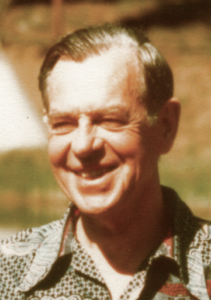
Joseph John Campbell was an American author, teacher and comparative mythologist born in New York in 1904. As a child, he became fascinated by Indigenous American cultures and the collections at the American Museum of Natural History. That early interest eventually widened into a lifelong study of mythology, religion, literature and psychology.
Campbell began college at Dartmouth before transferring to Columbia University, where he studied medieval literature and completed bachelor’s and master’s degrees. He continued studying in Paris and Munich, encountering the work of writers and thinkers who would deeply influence him, including James Joyce, Thomas Mann, Sigmund Freud and Carl Jung.
In 1934, Campbell joined the literature department at Sarah Lawrence College. He remained there until retiring in 1972, teaching generations of students to compare myths across cultures rather than examine each tradition in isolation.
His best-known book, The Hero with a Thousand Faces, appeared in 1949. Its central argument—that heroic myths share an underlying journey—eventually carried Campbell’s work far beyond the classroom.
Campbell died in 1987. The following year, PBS broadcast Joseph Campbell and the Power of Myth, a series of conversations with journalist Bill Moyers. The interviews introduced Campbell’s ideas to a vast new audience and helped turn a scholar of comparative mythology into an enduring figure in popular culture.
Was Joseph Campbell a Folklorist?
Campbell is sometimes described as a folklorist because he studied myths, folktales and traditional narratives. However, comparative mythologist is the more precise primary description.
Folklorists often investigate stories as living cultural expressions. They study who tells them, how they circulate, what changes between versions and what they mean within a particular community. Some conduct fieldwork or build carefully documented collections of oral tradition.
Campbell’s method was different. He brought narratives from many places and periods into conversation with one another, looking for shared symbols and psychological patterns. His work crossed mythology, comparative religion, literature and Jungian psychology.
That distinction helps explain both his appeal and the criticism directed toward him. Campbell looked across cultural boundaries and saw unity. Folklorists are often more concerned with what becomes invisible when those boundaries are crossed too quickly.
What Is the Monomyth?
The monomyth is Campbell’s term for the recurring pattern he believed lay beneath heroic narratives from different cultures.
Campbell borrowed the word from James Joyce’s Finnegans Wake. In The Hero with a Thousand Faces, he described the core movement of the mythic adventure as:
- Separation or departure: The hero leaves the familiar world.
- Initiation: The hero enters an unfamiliar realm, undergoes trials and receives some form of knowledge, transformation or reward.
- Return: The hero comes back carrying a boon that can renew ordinary life or benefit the community.
This three-part cycle—not a mandatory checklist of 17 plot points—is the center of Campbell’s theory.
The familiar expression hero’s journey does not appear as such in the original 1949 text. Campbell wrote of the hero-quest, the hero-deed and the hero journeying through unfamiliar forces. “The hero’s journey” became the popular name for the model over time.
The 17 Stages of Joseph Campbell’s Hero’s Journey
Campbell explored numerous episodes and variations within the cycle. These are now commonly arranged as 17 stages divided among departure, initiation and return.
Not every myth includes all 17. They are better understood as possible expressions of the larger journey than as compulsory steps in a story formula.
Departure
| # | Stage | What it represents |
|---|---|---|
| 1 | The Call to Adventure | A disruption, invitation or need draws the hero beyond ordinary life. |
| 2 | Refusal of the Call | Fear, obligation or reluctance causes the hero to resist the journey. |
| 3 | Supernatural Aid | A guide, protector or power gives the hero assistance. |
| 4 | Crossing the First Threshold | The hero passes from the familiar world into the unknown. |
| 5 | Belly of the Whale | The old identity is swallowed, dissolved or left behind as transformation begins. |
Initiation
| # | Stage | What it represents |
|---|---|---|
| 6 | The Road of Trials | The hero faces tests, ordeals and lessons. |
| 7 | The Meeting with the Goddess | The hero encounters a figure or experience representing wholeness, love or life-giving power. |
| 8 | Woman as Temptress | Desire or attachment threatens to divert the hero from the journey. The gendered name reflects Campbell’s original presentation and is one of the model’s most criticized features. |
| 9 | Atonement with the Father | The hero confronts and is reconciled with an ultimate source of authority or judgment. |
| 10 | Apotheosis | The hero experiences illumination, expansion or a transformed state of being. |
| 11 | The Ultimate Boon | The hero obtains the knowledge, power or gift sought through the journey. |
Return
| # | Stage | What it represents |
|---|---|---|
| 12 | Refusal of the Return | The hero resists returning to ordinary life. |
| 13 | The Magic Flight | The hero escapes with the boon, sometimes pursued by hostile forces. |
| 14 | Rescue from Without | Someone or something from the ordinary world helps bring the hero home. |
| 15 | Crossing the Return Threshold | The hero must integrate the experience of the extraordinary world into ordinary life. |
| 16 | Master of the Two Worlds | The hero achieves freedom or balance between the material and spiritual, familiar and transformed worlds. |
| 17 | Freedom to Live | Released from paralyzing fear, the hero can live more fully in the present. |
Modern diagrams often make this sequence appear cleaner and more mechanical than Campbell intended. In his account, stories may omit episodes, combine them, reverse their implications or reach different forms of climax. The sacred marriage, reconciliation with a father figure, apotheosis and theft of an elixir are alternatives—not four boxes every hero must check.
A Simple Example of the Hero’s Journey
Imagine a young woman living in a village where no one ventures beyond the river after sunset. When her brother disappears, she hears his voice calling from the opposite bank.
She initially refuses to follow. An old ferryman gives her a lantern that burns only in the presence of truth. She crosses the river, travels through a country of distorted reflections and discovers that the voice belongs to a creature imitating her brother. After confronting it, she finds the missing villagers trapped beneath the water and leads them home.
Campbell’s model might identify:
Call to adventure → refusal → supernatural aid → threshold crossing → road of trials → ordeal and revelation → ultimate boon → magic flight → return threshold
The boon is not merely the rescued brother. It is the knowledge that allows the village to understand the danger beyond the river.
That final return is essential to Campbell’s conception. A journey becomes socially meaningful when the hero brings something back.
Joseph Campbell’s Four Functions of Myth
Campbell believed mythology served four broad functions in human life:
- Mystical: Awakening awe before the mystery of existence.
- Cosmological: Presenting an image of the universe consistent with a culture’s understanding of the world.
- Sociological: Supporting, explaining or validating a social order.
- Psychological or pedagogical: Guiding individuals through the stages and crises of life.
These functions explain why Campbell regarded myth as more than old fiction. Myths connect people to mystery, explain the world, organize communities and provide symbolic guidance through birth, maturity, loss, transformation and death.
The framework is useful, but it also raises an investigative question: whose social order does a myth validate, and who might be constrained by it? A story can guide one listener while warning another to remain in an assigned place.
“Follow Your Bliss”
Campbell’s most famous phrase is “follow your bliss.” It emerged from his discussions of vocation, inward necessity and the hero’s willingness to leave a life that no longer feels alive.
The phrase is sometimes reduced to “do whatever makes you happy.” Campbell meant something more demanding. Bliss was not constant pleasure or an escape from responsibility. It was the deep current of aliveness that may lead a person toward difficult work, uncertainty and sacrifice.
Its connection to the hero’s journey is clear: the call often arrives before the traveler knows where the road leads.
Joseph Campbell and Star Wars
Campbell’s association with Star Wars helped make the hero’s journey a standard part of popular storytelling.
George Lucas acknowledged that Campbell’s work helped him recognize and organize the mythic patterns emerging in his drafts. Luke Skywalker’s movement from ordinary life into adventure, his supernatural assistance, trials, confrontation and return made the films an accessible modern example of Campbell’s ideas.
The relationship is sometimes overstated. Campbell did not write Star Wars, nor did Lucas simply fill in a 17-stage template. Lucas had already produced substantial drafts before studying The Hero with a Thousand Faces more deliberately. Campbell’s framework helped him focus and interpret the story he was developing.
Campbell’s influence on screenwriting grew further through Christopher Vogler, whose influential Hollywood memo and later book The Writer’s Journey adapted the monomyth into a more practical writing model. Many of the simplified hero’s-journey diagrams now circulating online owe as much to these later adaptations as they do to Campbell’s original book.
Joseph Campbell vs. Vladimir Propp
Campbell and Russian folklorist Vladimir Propp both searched for recurring patterns beneath traditional stories, but they asked different questions and used different methods.
| Joseph Campbell | Vladimir Propp |
|---|---|
| Comparative mythologist and literature professor | Folklorist and literary scholar |
| Compared myths and religious narratives across cultures | Analyzed 100 Russian wonder tales |
| Interpreted symbolic and psychological similarities | Classified narrative actions and their sequence |
| Described separation, initiation and return | Identified 31 possible functions |
| Focused on transformation and the meaning of the hero’s quest | Focused on what actions do within the structure of a tale |
| Proposed a broadly cross-cultural pattern | Made claims about a specific folktale corpus |
Propp’s question was largely structural: What action occurs here, and where does it appear in the sequence?
Campbell’s was comparative and interpretive: What does this journey reveal about the shared human experience?
Neither theory should be mistaken for a universal law. Propp’s morphology becomes less reliable when removed from the wonder tale. Campbell’s monomyth becomes less reliable when similarity is treated as more important than cultural context.
Criticism of Joseph Campbell’s Theory
Campbell’s work is enormously influential outside folklore studies, but many folklorists and other scholars have challenged the monomyth.
It can encourage cherry-picking
If a researcher begins by assuming that one heroic pattern exists, stories that fit the pattern may receive attention while stories that contradict it are treated as exceptions or ignored. The theory can then appear universal because the evidence was selected to make it appear universal.
It can erase cultural differences
Two stories may contain a journey into another world while giving that journey completely different religious, historical or social meanings. Reducing both to “crossing the threshold” can hide more than it reveals.
It privileges a particular kind of hero
The classic formulation centers an individual hero and frequently uses masculine, hierarchical and psychoanalytic language. Campbell himself acknowledged that most of his examples were male and that he could not simply prescribe an equivalent journey for women.
Many traditions instead emphasize communal survival, cyclical responsibility, ancestral continuity or heroes who do not return with triumphant mastery.
Its categories can become too flexible
A model capable of accommodating almost any event risks becoming impossible to disprove. A refusal can be present or absent. A helper can be a person, power, accident or realization. A return can be literal, psychological or symbolic. The more flexible the categories become, the easier it is to make any selected story fit.
These criticisms do not make Campbell useless. They define the conditions under which his map should be handled carefully.
Can the Hero’s Journey Explain Urban Legends?
Usually, not very well.
Most urban legends are not hero quests. They often involve ordinary people who encounter danger, violate a warning, misunderstand evidence or discover a horrifying truth. The protagonist may learn nothing, bring nothing home and possess no power to restore the community.
The story may end when the caller is revealed to be inside the house, when the supposed dog licking a hand is exposed as something else, or when the driver realizes the pursuing motorist was trying to warn her. Shock, irony and belated recognition matter more than heroic transformation.
Some longer legends do contain Campbell-like movements:
- A traveler leaves the familiar world.
- A forbidden boundary is crossed.
- A supernatural helper or warning appears.
- The traveler returns with knowledge unavailable to others.
But identifying those similarities does not explain why a legend is told as true, how it spreads or why a community finds it believable. Those questions belong more directly to folklore studies.
Campbell is most useful to the archive when a legend has become mythic—when a local account grows into a symbolic journey, or when storytellers reshape it around a heroic confrontation. He helps reveal what a story has become. He is less equipped to establish where the account began or why people passed it along as fact.
Why Joseph Campbell Still Matters
Campbell gave modern audiences a language for recognizing the movement of transformation in stories.
The call. The threshold. The ordeal. The gift carried home.
Those images became so familiar that they can now feel inevitable. That is partly the consequence of Campbell’s influence: generations of writers deliberately constructed stories using a pattern that Campbell originally claimed to discover in older myths.
His work invites us to place distant stories beside one another and notice unexpected echoes. Its danger lies in mistaking an echo for proof that the stories are saying the same thing.
For an archive, the right response is neither worship nor dismissal. We can use Campbell’s map while keeping the original landscape in view.
Frequently Asked Questions
What is Joseph Campbell best known for?
Joseph Campbell is best known for The Hero with a Thousand Faces and his theory of the monomyth, popularly called the hero’s journey. He argued that many heroic myths share a broad cycle of separation, initiation and return.
Was Joseph Campbell a folklorist?
Campbell studied folklore, but comparative mythologist is the more accurate primary description. Unlike many folklorists, he generally focused on similarities across myths rather than documenting how traditions function within particular communities.
What are the three main parts of the hero’s journey?
The three essential movements are departure or separation, initiation and return. The hero leaves the familiar world, undergoes transformation in an unfamiliar realm and returns with a boon or new understanding.
Are all 17 stages required?
No. The 17 commonly listed stages are possible episodes and variations within Campbell’s broader cycle. A heroic myth does not need to contain every one, and they should not be treated as a rigid screenwriting formula.
Did Joseph Campbell create the phrase “hero’s journey”?
Campbell developed and popularized the underlying model, but the exact phrase does not appear in the original 1949 edition of The Hero with a Thousand Faces. He used terms such as hero-quest and hero-deed, and later adopted the now-familiar wording.
Did Joseph Campbell influence Star Wars?
Yes. George Lucas credited Campbell’s work with helping him understand and focus the mythic structure of Star Wars. However, Lucas did not simply copy a completed 17-step formula, and substantial development of the story preceded his more deliberate use of Campbell.
What is the difference between Joseph Campbell and Carl Jung?
Carl Jung was a psychiatrist who developed theories of archetypes and the collective unconscious. Campbell was a comparative mythologist who drew heavily upon Jungian ideas when interpreting recurring symbols and narrative patterns.
What does “follow your bliss” mean?
Campbell used the phrase to describe following the deep source of vitality and meaning within one’s life. He did not mean pursuing effortless pleasure; the path of bliss may involve risk, work and sacrifice.
Sources and Further Reading
- Campbell, Joseph. The Hero with a Thousand Faces. Princeton University Press, first published 1949.
- Joseph Campbell Foundation. “About Joseph Campbell.”
- Joseph Campbell Foundation. “Joseph Campbell and the Hero’s Journey.”
- Campbell, Joseph, with Bill Moyers. The Power of Myth. Doubleday, 1988.
- Campbell, Joseph. The Masks of God. Four volumes, 1959–1968.
- Propp, Vladimir. Morphology of the Folktale. Second English edition, University of Texas Press, 1968.