The Folklorist Who Taught Us How Stories Work
More than a century ago, Vladimir Propp opened a collection of Russian fairy tales and began looking past the witches, enchanted forests and impossible tasks.
He wanted to know what remained when the details were stripped away.
A dragon might become a sorcerer. A missing princess might become a stolen treasure. A magic horse might become a helpful bird. The characters and objects changed, but the actions beneath them often appeared in the same order.
Propp believed he had discovered something like the hidden anatomy of the folktale.
His system was never intended to explain every story humans tell. It was developed from a particular group of Russian wonder tales, and applying it indiscriminately can flatten precisely the cultural differences that make folklore valuable. Nevertheless, his work changed the way scholars, writers and later theorists thought about narrative.
He taught us to ask a deceptively useful question: What is this part of the story doing?
Who Was Vladimir Propp?
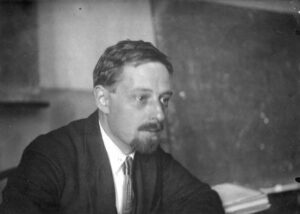
Vladimir Yakovlevich Propp was a Russian and Soviet folklorist and literary scholar born in St. Petersburg in 1895. He studied Russian and German philology at the University of St. Petersburg and later taught at Leningrad State University, where his work expanded beyond story structure to include Russian heroic songs, ritual, laughter, festivals and the historical origins of wonder tales.
Today, Propp is best known for one relatively short book: Morphology of the Folktale.
The book first appeared in Russian in 1928 under a title more literally translated as Morphology of the Wonder Tale. Its international influence came later. An English translation appeared in 1958, followed by a revised English edition in 1968. By then, structuralism and the emerging study of narrative had created an audience ready for Propp’s central idea: stories could be compared according to the functions of their actions, not merely their characters or subject matter.
Propp died in Leningrad in 1970. His name had by then become inseparable from the study of narrative structure.
What Did Vladimir Propp Study?
Propp analyzed 100 tales in Alexander Afanasyev’s collection of Russian folktales. More specifically, he concentrated on the genre often called the wonder tale: stories involving magical trials, supernatural helpers, transformations, quests and fantastic rewards.
He compared tales that appeared very different on the surface. Consider these two imaginary events:
- A king gives an eagle to the hero, and the eagle carries him to a distant kingdom.
- An old woman gives the hero a horse, and the horse carries him across a forbidden forest.
The animals, donors and destinations differ. Structurally, however, the same action has occurred: the hero receives assistance that enables a journey.
Propp called these recurring actions functions.
He defined a function according to the significance an action has for the course of the story. Who performs it may change. How it happens may change. Its narrative job remains recognizable.
What Is Morphology of the Folktale?
In biology, morphology is the study of form and structure. Propp borrowed the term to describe the component parts of wonder tales and the relationships among them.
Earlier systems commonly classified tales by their characters, motifs or plots. Propp thought those methods could become unstable. A dragon and a witch might perform the same narrative task, while a single character might perform several different tasks.
His solution was to classify the actions.
From his comparison of the tales, Propp proposed four foundational ideas:
- The stable elements of a tale are the functions performed by its characters.
- The number of functions found in the wonder tale is limited.
- The functions follow a consistent sequence.
- The wonder tales he studied belong to a single structural type.
This does not mean that every folktale contains all 31 functions. It means that when particular functions appear, they generally occur in the same relative order. A tale may omit many of them, repeat a sequence or begin a new movement after one problem has been resolved.
Propp was describing a repertoire, not prescribing a formula.
Vladimir Propp’s 31 Functions
Propp identified 31 possible functions following a story’s initial situation. English labels differ slightly among translations and summaries, but the narrative actions remain substantially the same.
| # | Function | What happens in the story |
|---|---|---|
| 1 | Absentation | Someone leaves the family or home. |
| 2 | Interdiction | The hero receives a warning or prohibition. |
| 3 | Violation | The warning or prohibition is broken. |
| 4 | Reconnaissance | The villain attempts to gather information. |
| 5 | Delivery | The villain receives information about the victim. |
| 6 | Trickery | The villain attempts to deceive someone. |
| 7 | Complicity | The victim is deceived and unwittingly assists the villain. |
| 8 | Villainy or lack | Harm occurs, or something important is missing or desired. |
| 9 | Mediation | The misfortune or lack becomes known and prompts action. |
| 10 | Beginning counteraction | The hero decides to resist or remedy the problem. |
| 11 | Departure | The hero leaves home. |
| 12 | First function of the donor | The hero is tested, questioned or challenged. |
| 13 | Hero’s reaction | The hero responds to the test or donor. |
| 14 | Receipt of a magical agent | The hero obtains a magical object, power or helper. |
| 15 | Guidance | The hero is led or transported toward the goal. |
| 16 | Struggle | The hero and villain confront one another. |
| 17 | Branding | The hero receives a wound, mark or identifying object. |
| 18 | Victory | The villain is defeated. |
| 19 | Liquidation | The original harm or lack is remedied. |
| 20 | Return | The hero begins the journey home. |
| 21 | Pursuit | The hero is chased. |
| 22 | Rescue | The hero escapes or is rescued from pursuit. |
| 23 | Unrecognized arrival | The hero arrives without being recognized. |
| 24 | Unfounded claims | A false hero claims the achievement or reward. |
| 25 | Difficult task | A demanding new trial is assigned. |
| 26 | Solution | The task is completed. |
| 27 | Recognition | The true hero is identified. |
| 28 | Exposure | The false hero or villain is revealed. |
| 29 | Transfiguration | The hero receives a new appearance or status. |
| 30 | Punishment | The villain or false hero is punished. |
| 31 | Wedding | The hero marries, takes the throne or receives a comparable reward. |
Seen as a complete list, the functions can resemble a rigid plot outline. That is misleading. Propp did not claim that every story marches through every item. His discovery concerned the limited types of action and their sequence within the tales he examined.
Propp’s Seven Spheres of Action
Propp also grouped character activity into seven spheres of action. These are frequently called his seven character types, but “spheres of action” is more precise. They describe bundles of narrative functions rather than seven fixed personalities.
| Sphere of action | Narrative role |
|---|---|
| Villain | Causes harm, struggles with the hero and may pursue the hero. |
| Donor | Tests the hero and provides a magical agent or assistance. |
| Helper | Aids the hero’s journey, rescue, transformation or completion of a task. |
| Princess and her father | Represent the sought-for person or reward, assign tasks, recognize the hero or expose the false hero. |
| Dispatcher | Makes the problem known and sends the hero on the quest. |
| Hero | Undertakes the search, responds to the donor and ultimately receives recognition or reward. |
| False hero | Makes illegitimate claims and attempts to receive the hero’s reward. |
One character can occupy more than one sphere. A king might both dispatch the hero and act as donor by providing a sword. Conversely, one sphere can be shared among several characters.
This is why reducing Propp’s theory to a cast of seven stock characters misses part of his insight. He was less interested in who a character is than in what that character does.
An Example of Propp’s Theory
Imagine a tale in which a girl is warned never to enter the northern woods. She enters anyway. A creature steals her shadow, and she begins to disappear. An old traveler tests her kindness, then gives her a silver lantern. Guided by its light, she finds the creature, recovers her shadow and returns home.
Propp’s approach would look beyond the particulars and identify a sequence something like this:
Interdiction → violation → villainy → mediation → departure → donor’s test → hero’s reaction → receipt of a magical agent → guidance → struggle → victory → liquidation → return
Another tale could replace the girl with a prince, the woods with an undersea kingdom, the stolen shadow with a missing sister and the lantern with a talking fish. The surface would be entirely different. Much of the underlying sequence could remain the same.
Did Propp Invent the Hero’s Journey?
No. Propp’s morphology and Joseph Campbell’s hero’s journey are related only in the broad sense that both identify recurring patterns in traditional narrative.
Propp published Morphology of the Folktale in 1928. Campbell published The Hero with a Thousand Faces in 1949. Propp classified actions in a corpus of Russian wonder tales. Campbell drew from myths, religious traditions and psychological interpretations across cultures to describe what he called the monomyth.
Their goals and methods were different:
| Vladimir Propp | Joseph Campbell |
|---|---|
| Studied 100 Russian wonder tales | Compared myths and religious narratives from many traditions |
| Identified 31 possible narrative functions | Described a cyclical heroic journey |
| Focused on what characters do | Focused on the hero’s transformation and symbolic journey |
| Built a structural classification | Developed a comparative and interpretive model |
Propp’s work is therefore not simply an earlier version of Campbell’s. Nor should either system be treated as a universal law governing every culture’s stories.
Can Propp’s Theory Explain Urban Legends?
Only partially—and that limitation matters.
Propp constructed his morphology for Russian magical tales. Urban legends usually behave differently. They are commonly presented as events that really happened, or might have happened, to an ordinary person in the recent past. Many are short, lack a traditional quest and end at the moment of shock or revelation.
Consider a legend in which a babysitter receives frightening telephone calls and discovers they are coming from inside the house. It contains possible equivalents to interdiction, reconnaissance, trickery, delivery of information and villainy. But it does not proceed toward a magical donor, heroic struggle, return, recognition and wedding. Its purpose depends upon interrupted safety and an abrupt reversal—not the restoration typical of the wonder tale.
Propp’s questions can still be useful:
- Which actions remain stable as a legend changes?
- Which details can be exchanged without altering the story’s identity?
- Does the warning always precede the violation?
- What narrative function does a supernatural creature perform?
- Which parts of the story make it recognizable across different tellings?
Applied cautiously, Propp helps us see the framework beneath a legend. Applied mechanically, he can make every story look like an incomplete fairy tale.
Urban legends also require questions his morphology was not designed to answer: Who claims the event happened? How did the story circulate? Why was it believed? What social fear does it express? How does its meaning change between communities?
Structure is evidence, but it is not the entire case.
Why Vladimir Propp Still Matters
Propp altered the scale at which stories could be examined. Instead of comparing whole plots or cataloging isolated motifs, he demonstrated that researchers could study the sequence and function of narrative actions.
His work influenced structuralist thought and helped prepare the ground for narratology—the systematic study of narrative. Writers, filmmakers, game designers and media teachers later adapted his ideas, sometimes far beyond the genre he originally investigated.
His lasting contribution is not the promise of a machine capable of decoding every story. It is a method of attention.
When two legends wear different faces, Propp encourages us to ask whether the same skeleton is moving underneath.
Frequently Asked Questions
Was Vladimir Propp a folklorist?
Yes. Vladimir Propp was a Russian and Soviet folklorist and literary scholar. Although he is widely discussed in literary theory and narratology, his principal research subject was folklore, including Russian wonder tales, epic songs, ritual and festivals.
What is Vladimir Propp best known for?
Propp is best known for Morphology of the Folktale, first published in Russian in 1928. In it, he identified 31 recurring narrative functions and seven spheres of action within the Russian wonder tales he studied.
What are Propp’s 31 functions?
They are recurring actions that advance a tale, including interdiction, violation, trickery, departure, testing by a donor, receipt of magical assistance, struggle, victory, return, recognition and reward. A tale does not need to contain all 31 functions.
What are Propp’s seven character types?
They are more accurately called seven spheres of action: villain, donor, helper, princess and her father, dispatcher, hero and false hero. They describe narrative roles, and a single character may occupy more than one sphere.
Did Propp believe all stories have the same structure?
No. His principal claims concerned the Russian wonder tales in his selected corpus. Later writers have applied his model to novels, films and other genres, but those broader applications should not be confused with Propp’s original scope.
How is Propp different from Joseph Campbell?
Propp classified recurring actions and their sequence in Russian wonder tales. Campbell described a symbolic heroic cycle using myths and religious narratives from many traditions. The two systems overlap in places but were developed for different purposes.
Sources and Further Reading
- Propp, Vladimir. Morphology of the Folktale. Second edition, translated by Laurence Scott and revised by Louis A. Wagner. University of Texas Press, 1968.
- Propp, Vladimir. Theory and History of Folklore. Edited by Anatoly Liberman. University of Minnesota Press, 1984.
- Propp, Vladimir. Historical Roots of the Wondertale. Indiana University Press, English translation published 2025.
- Afanasyev, Alexander. Russian Fairy Tales, the collection from which Propp selected the tales analyzed in his morphology.